
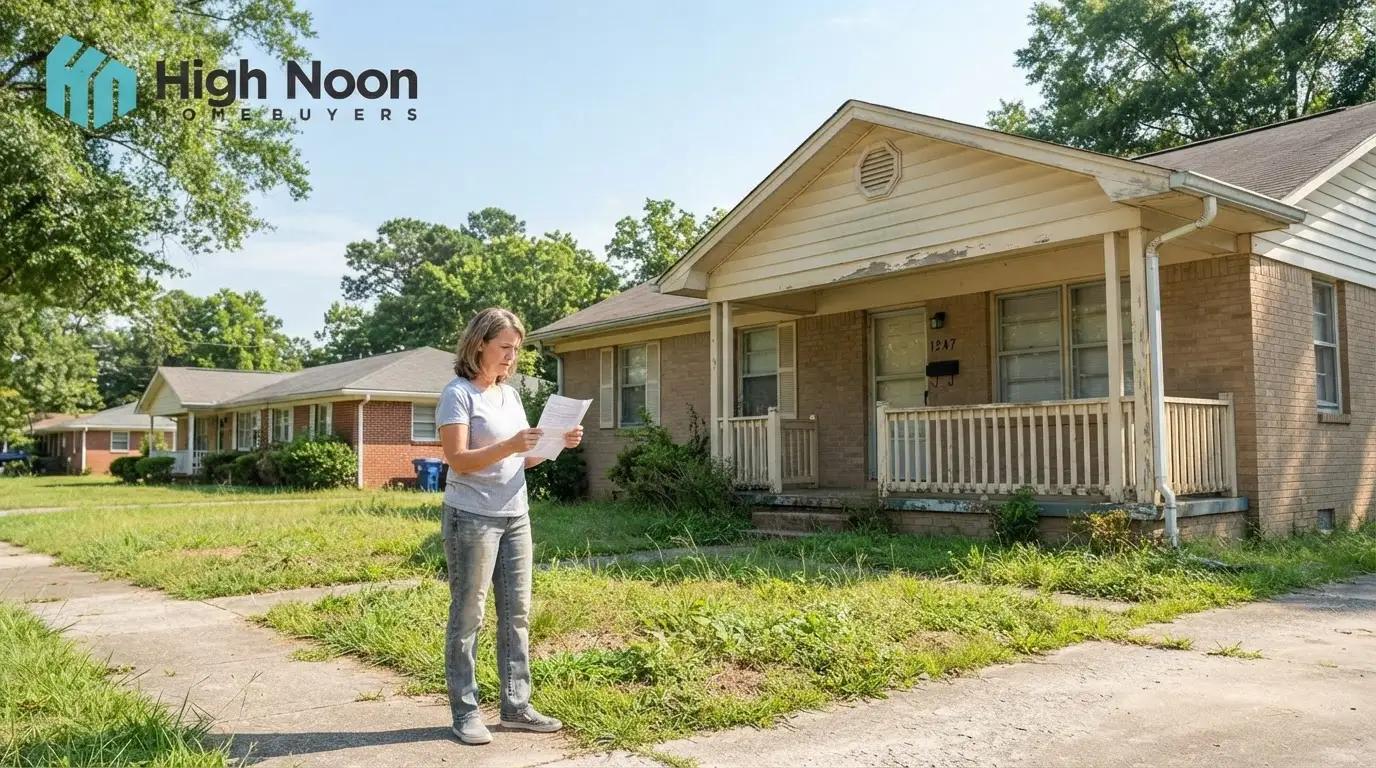
Holding a bright code violation notice can feel alarming. Your first thoughts may turn to fines, court, or even losing the house. Many owners feel embarrassed, especially when neighbors may have noticed the notice on the door. That reaction is normal, and it is manageable once you understand the process.
Code violations in Columbia, SC usually leave owners with two paths. You can work with the city to fix the problems and keep the property. You can also sell as-is and let the buyer handle repairs and follow-up. This guide explains both options in plain language so you can decide calmly.
High Noon buys houses around Columbia, so the team sees these notices often. This article is educational and not legal advice. Your city and attorney have the final word on your specific case.
Columbia’s Code Enforcement Division enforces property maintenance and nuisance rules inside city limits. Its work covers trash, overgrown yards, unsafe structures, and exterior upkeep. The goal is safe, livable neighborhoods rather than punishment. Violation letters fall under property maintenance, not criminal law.
A notice of violation lists specific problems and sets a correction deadline. It also explains what may happen if the work is not completed. Most notices cite the ordinance involved and list a contact number. Read the entire letter carefully before choosing your next step.
The rules apply broadly across the city. Owner-occupied homes in Shandon and Eau Claire can be inspected. Rentals near the USC campus and vacant houses are covered too.
Inspections usually begin after a neighbor or city staff member reports a concern. The inspector then compares the property to city ordinances. Findings are documented with notes or photos. A notice follows if problems exist.
Inspectors do not usually act without a reason. Most cases start with a call or a visible hazard on the property. A calm, cooperative response from the owner often shapes how the file moves forward.
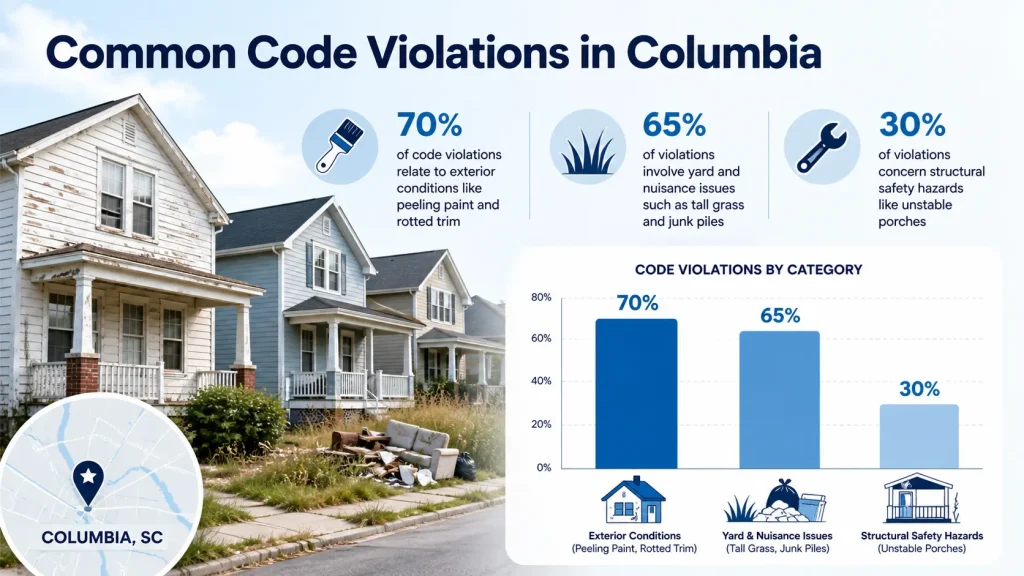
Most violations fall into a few familiar categories. Older homes in Rosewood, Shandon, and North Main see them often. Investor rentals and long-vacant houses face them too. Columbia also publishes public GIS data on recorded code violations, so activity is tracked citywide.
| Violation type | Typical examples | Why it matters |
| Exterior condition | Peeling paint, rotted trim, clogged gutters | Water damage spreads quickly |
| Yard and nuisance | Tall grass, junk piles, inoperable vehicles | Neighbor complaints trigger inspections |
| Structural safety | Unstable porches, loose railings, unsecured structures | Creates injury and liability risks |
| Occupancy and use | Unapproved rooming, outbuildings used as living space | Requires specific approvals |
One neglected porch rarely causes serious trouble alone. Several small problems together often draw repeated city attention. Addressing them early keeps the file from growing heavier. Small repairs can prevent larger notices later.
Investor buyers often pick up properties where earlier owners let maintenance slide. Inherited homes and long-vacant houses also generate many neighbor complaints. Overgrowth and junk piles are among the most common reasons for calls. For repair-heavy properties, read our guide on selling a house that needs major repairs.
Context helps you anticipate what inspectors may flag first. Older Shandon and Rosewood homes often show peeling paint and worn porches. Rentals near Five Points may show occupancy issues.
Document the property before you contact anyone. Clear photos help you explain the scope of the problem later. They also help you compare the notice with what you actually see. Keep the original files in a backup folder.
Neighbors often report what they notice first, so a respectful conversation can prevent escalation. Introduce yourself and ask what the neighbor observed. Many misunderstandings end quickly once everyone shares the same information.
Most cases follow a predictable sequence. The timeline depends on how quickly the owner responds. Early action keeps more options open. Understanding each stage helps you act before costs grow.
1. A complaint or inspector observation opens the file.
2. An inspector visits and documents visible conditions.
3. A notice of violation sets a correction deadline.
4. A re-inspection checks whether the work is complete.
5. Unresolved violations can lead to fines, cleanup bills, and liens.
| Stage | What the owner should do |
| Notice received | Read the deadline and list every item |
| Repairs underway | Keep receipts, photos, and contractor invoices |
| Re-inspection | Confirm the date and be present if possible |
| Fines or cleanup | Request the itemized bill and review it closely |
| Lien risk | Speak with a title professional before listing |
Each step builds on the one before it. Skipping a stage usually means the file moves faster toward fines. Staying responsive at every point keeps your choices open. Responding quickly also shows the city you are working in good faith.
Unpaid fines and cleanup costs can become municipal liens recorded against the property. Most buyer lenders expect those liens resolved at closing. Liens follow the rules in South Carolina’s state code. Ask a title professional to confirm any balance before listing.
Exact deadlines and dollar amounts come from the city and appear on your notice. Those details can differ by case, so they should never be guessed. Checking the notice first prevents costly misunderstandings later.
Some owners wait until a lien appears before acting. That approach usually makes the situation more expensive and more stressful. Acting while the file is still small gives you more control. Even a partial fix can show progress to the city.
Progress documented with dates and photos supports every future conversation with the city. It also gives buyers clear evidence of the work already completed.
Starting with the most serious hazards also reduces risk for anyone visiting the property. Safety items deserve attention before cosmetic work begins.

Ignoring a notice rarely leads to an instant seizure. Costs tend to grow quietly over time. Every missed deadline adds financial and title risk. The longer a problem sits, the harder it becomes to solve.
Many owners assume a notice will simply go away if they wait. In practice, the city may complete cleanup work and send the owner the bill. Those charges can turn into liens that complicate any future sale.
A landlord who ignores grass-cutting notices may face surprise bills at closing. Early repairs often cost less than mounting penalties and cleanup charges. Rental income can also suffer if units are flagged as unsafe. Ask an attorney right away if large fines appear.
Owners sometimes miss notices sent to an old mailing address. Updating your address with the city and county keeps important letters from going astray. Check mail and posted notices regularly while you own the property.
Owners usually compare repair costs against net proceeds. A repaired sale may look better on paper. Holding costs and commissions can shrink what you actually keep. The right answer depends on your timeline, budget, and goals.
| Option | Best for | Trade-off |
| Fix and keep | Minor violations on a long-term home | Upfront cost and time |
| Fix then list | Owners who can fund repairs | Commissions and holding costs |
| Sell as-is | Inherited, vacant, or distant properties | Usually lower price, faster close |
As-is sales suit inherited homes, long-vacant houses, and owners living far away. For more context, see selling inherited houses in Columbia. Owners who plan to keep a property often benefit from repairing the worst items first. Minor violations may not justify a major expense.
Consider a simple example. A repair estimate of several thousand dollars may look manageable. Add months of insurance, utilities, and agent fees, and the math can change quickly. Compare the final number you would keep under each option.
Carrying costs add up across months of ownership. Taxes, insurance, utilities, and lawn care continue while a property sits. Those expenses reduce the advantage of any repair-first plan.
High Noon Home Buyers is a BBB Accredited business with an A+ rating. You can verify its BBB profile for High Noon Home Buyers before making any decision. Reviewing a company’s record is a sensible step for any seller. Take time to compare options.
A side-by-side worksheet helps when the numbers feel overwhelming. Write each cost on one line and the expected sale price on another. Subtract the total costs from the price to see what you keep.
You can usually sell a house with open code violations. Disclose known issues honestly before closing. Liens and large fines must be resolved during the transaction. Clear communication protects both sides of the deal.
Traditional buyers need safe, insurable homes for their lender. Cash buyers often close with violations still open. Lenders and insurers may refuse to fund a home with serious safety hazards. Settlement statements show exactly how liens get paid.
Timing matters, so check the Columbia housing market update before deciding. Condemnation or demolition orders shrink your options and need immediate attention. Talk with the city and a local attorney quickly.
Disclosure protects both sides of the transaction. Surprises at the table can stall a deal that was otherwise on track. Being upfront early usually leads to a smoother closing. Honest details also build trust with any buyer.
A title company or closing attorney typically searches for recorded liens before closing. That search reveals balances tied to code enforcement or unpaid city work. Early searches let sellers plan funds in advance.
A settlement review is the final checkpoint before money changes hands. Read every line of the statement and ask about anything unclear. Your closing attorney can explain each charge in plain terms before you sign. For a related read, see selling a house that needs major repairs.
Some owners believe a violation notice is wrong. Start by reading the notice for deadlines and appeal rights. Gather photos, receipts, and contractor invoices that show current conditions. Organized evidence makes every conversation more productive.
Documentation makes every conversation with the city easier. Keep copies of everything you send or receive. Save emails, texts, and mailing receipts with dates visible. If selling becomes the better route, see selling inherited houses in Columbia for examples.
The city’s Planning & Development contact page is a useful starting point. Procedures can change, so treat official guidance as final. Your attorney should guide any formal appeal. Ask questions in writing whenever possible.
Whichever path you choose, act before deadlines pass. Fighting a notice and selling a property can both work, but waiting usually costs more. A clear plan protects your money and your peace of mind. Revisit your options each time a new letter arrives.
A code violation means the city has found a property below its maintenance or safety rules. Common examples include overgrown yards, junk piles, unsafe porches, and unsecured vacant houses. Inspectors issue notices with deadlines so owners can correct problems early.
Yes, many owners sell houses with open violations. Disclosing known issues is important, and liens or large fines must be resolved at closing. Cash buyers often purchase as-is, then handle repairs and city follow-up after the sale is complete.
The deadline appears on your notice, and it varies by case. Read the letter carefully and note the correction date right away. If you need more time or clarification, call the contact listed on the notice and ask in writing.
Simple yard or trash issues usually resolve without a lawyer. Consider legal help for hearings, large fines, condemnation, or demolition threats. This article is not legal advice, so professional guidance should drive any major decision about rights or appeals.
Often, yes, as long as everyone agrees how the liens will be handled. They are usually paid from seller proceeds or factored into the price. Review closing documents carefully and ask your attorney to explain every balance.
Generally no, because a true as-is buyer plans to handle repairs after closing. Still, disclose every notice you received before making an agreement. A good buyer may adjust the offer around the repair list and any expected city costs.