
Finding someone in your property who shouldn’t be there can be infuriating. It’s stressful and confusing, and can leave you with a sense of violation. Property owners in South Carolina face a tough situation, and with squatter’s rights being widely misunderstood, the whole situation can be overwhelming. Many owners feel they’ll accidentally do something illegal or make the situation worse.
The good news is that property rights still matter. That said, they need to be enforced in the right way. In this guide, we’ll see how you can regain control of your property without the risk of fines, delays, or legal trouble. We’ll cover how the state treats squatters and what options are available to you.
In South Carolina, the difference between a squatter and a trespasser matters a lot more than most folks realize. There’s a significant legal distinction. A trespasser is someone who enters a property briefly, without permission, and can typically be removed by law enforcement. A squatter, though, is an unauthorized occupant who has taken up residence and may claim some form of legal possession.
The biggest hurdle is that once someone establishes occupancy, the situation then falls under landlord-tenant laws instead of criminal trespass laws. Even without lease agreements or explicit legal permission, the state may require an unlawful detainer process to get rid of them. This is where most property owners get stuck.
Mislabeling the situation can lead to serious delays. Police may refuse to intervene if they believe it’s a civil matter, and self-help evictions can backfire. This risk surges in areas with higher rental turnover and vacancy, like some parts of the Columbia market. In some neighborhoods, empty homes attract all the wrong kinds of attention. By correctly identifying whether you’re dealing with a trespasser or a squatter, you can take the right removal action.
South Carolina offers a faster removal option in limited situations called summary ejectment of trespassers. This process applies when an unauthorized occupant enters the property without any claim of legal permission and without a lease agreement. It’s designed for clear-cut cases where someone has no lawful right to be there.
To begin, the property owner typically files a police report documenting the unauthorized entry. Law enforcement may verify that no lease agreements, utility bills, or tenant history exist. If the situation qualifies, the case can move quickly through the court system.
A judge may issue a writ of possession authorizing the sheriff’s office to remove the occupant. This approach avoids a lengthy eviction lawsuit and reduces time spent in civil court. However, it’s not guaranteed. If the occupant claims continuous possession or produces documents suggesting tenancy, the case may shift into standard eviction proceedings.
Because timing and documentation matter, many owners seek legal advice before filing. When used correctly, summary ejectment is the fastest lawful way to regain control of a property in South Carolina.
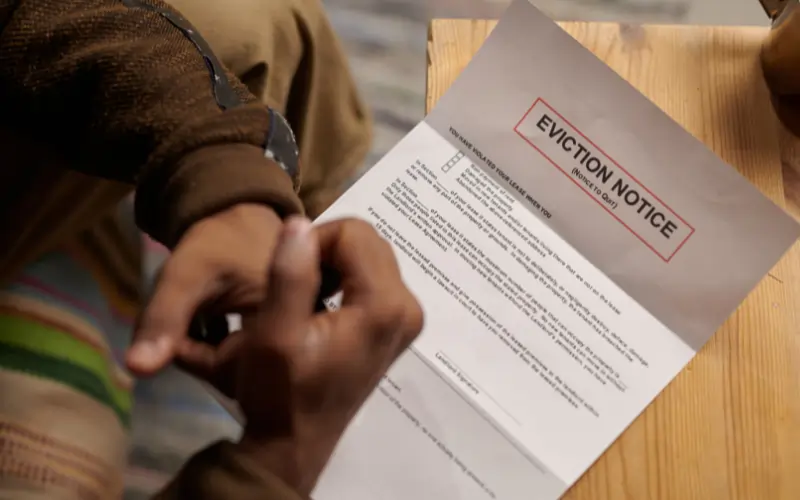
If a summary ejectment isn’t available or doesn’t apply to your situation, you’ll probably have to go through the standard eviction process. This starts with serving an eviction notice or a notice to vacate. This applies even if the occupant was never authorized to be there in the first place. South Carolina courts require proper, official notice before anything else can happen.
Once the notice is served, the owner then files an unlawful detainer action in the appropriate civil court. Then a hearing is scheduled, and both sides present their evidence. This can include bills, witness statements, or any potential proof that no lease exists. Habitability disputes, like a home with mold, can complicate things even more. If the ruling is in the owner’s favor, the eviction order is issued.
After that, local law enforcement will carry out the actual, physical eviction from the premises. Be patient, but get the paperwork right, or it’s going to take longer.
No two cases are the same, so each one will have its own timeline. Standard eviction cases are handled in the magistrates’ court and will usually move relatively quickly. Circuit court cases for ejectment are different. They’re fully civil lawsuits that can drag on for months. They’ll also be considerably more expensive.
Ejectment is the expected route when there’s a dispute over property rights, ownership claims, or if legal possession isn’t immediately clear. These are more complicated cases that involve formal pleadings, extended hearings, and motions of various types. This can lead to even more expense, with the extended timeline often resulting in continued property damage and lost rental income. On top of it all are the mounting legal fees.
Too many owners accidentally end up in circuit court by filing the wrong action or answering incorrectly in an unlawful detainer suit. In areas like Dentsville, vacant properties can attract serial squatters. This means more delays and more damage. With a little preparation, you can avoid an extra six months of legal hassle.
Squatter’s rights are commonly confused with adverse possession, but they’re not the same. Adverse possession is a high legal bar to clear. To claim adverse possession, the claim requires actual possession that is open and notorious, hostile, and exclusive. It also needs to stay continuous for a long period of time.
This sets a lot of conditions. It means the occupant must openly occupy the property without the owner’s permission and treat it as their own. Continuous possession means uninterrupted use over years, not just weeks or even months. Depending on the situation and property, paying property taxes is also needed.
Most squatters never come close to meeting these standards. Simply living in a vacant property or changing the locks doesn’t qualify as legal possession. Adverse possession claims rarely succeed, typically failing long before reaching a court hearing.
Knowing the difference between squatter’s rights and adverse possession is critical. It can help property owners push back against false claims. Squatters may delay removal through the eviction process; they are rarely successful in gaining ownership rights through adverse possession.
Property owners looking for a fast solution should avoid a “self-help eviction” in South Carolina. This means changing the locks, shutting off utilities, removing doors, or anything else that essentially forces someone out, without a court order. Even when the occupant is clearly unauthorized. There’s a not-insignificant risk of lawsuits, fines, or even criminal charges in some situations.
In areas like St. Andrews, owners who jump into action too quickly frequently find themselves in worse legal trouble than if they’d followed the right process. The safest approach is to rely on patience and complete, accurate documentation.
Removing squatters through the legal system isn’t free. Court filing fees, service costs, and constable or sheriff’s office fees add up quickly. Once a judge issues a writ of restitution or warrant for possession, a local constable is typically responsible for enforcing it.
Property damage is another major expense. Squatters often leave behind broken fixtures, trash, or vandalism that must be repaired before the property can be rented or sold. In some cases, owners pursue damages in small claims court using witness statements and documentation, but recovery isn’t guaranteed.
Hidden problems can also surface after removal. Plumbing failures, electrical issues, or damage similar to a failed septic system can appear once the property is inspected. These costs catch many owners off guard and can exceed the expense of the eviction itself.
For property owners dealing with squatters, dealing with them may not be the route you want to take. Whether it’s too expensive, too slow, or just too much stress and hassle, just skip it all. By working with High Noon Home Buyers, you’ll get a fair cash offer and an easy exit plan.
This option can be indispensable for owners of investment properties that deal with serial squatters or repeated damage. Rather than file eviction lawsuits or pay a property management company, it’s a transparent offer and a closing date you pick. We know how to deal with squatters, and we’ve got the time and resources to shoulder that burden.
Dealing with squatters can be frustrating in South Carolina, but acting out of anger or impatience usually only makes things worse. State law gives property owners some options, but they need to know which ones are applicable. They also need to be performed properly and in the right order.
Every situation is different, though. While some owners pursue eviction through the courts, others just decide the risk isn’t worth it. If you’re ready to move on without dealing with months of hearings, fees, delays, and constant uncertainty, you’ve got a way out. Reach out to High Noon Home Buyers today, and together we can create a simple sale solution that lets you move forward safely.
© High Noon Home Buyers. All Rights Reserved | Designed with 💙 by Reibar Marketing