
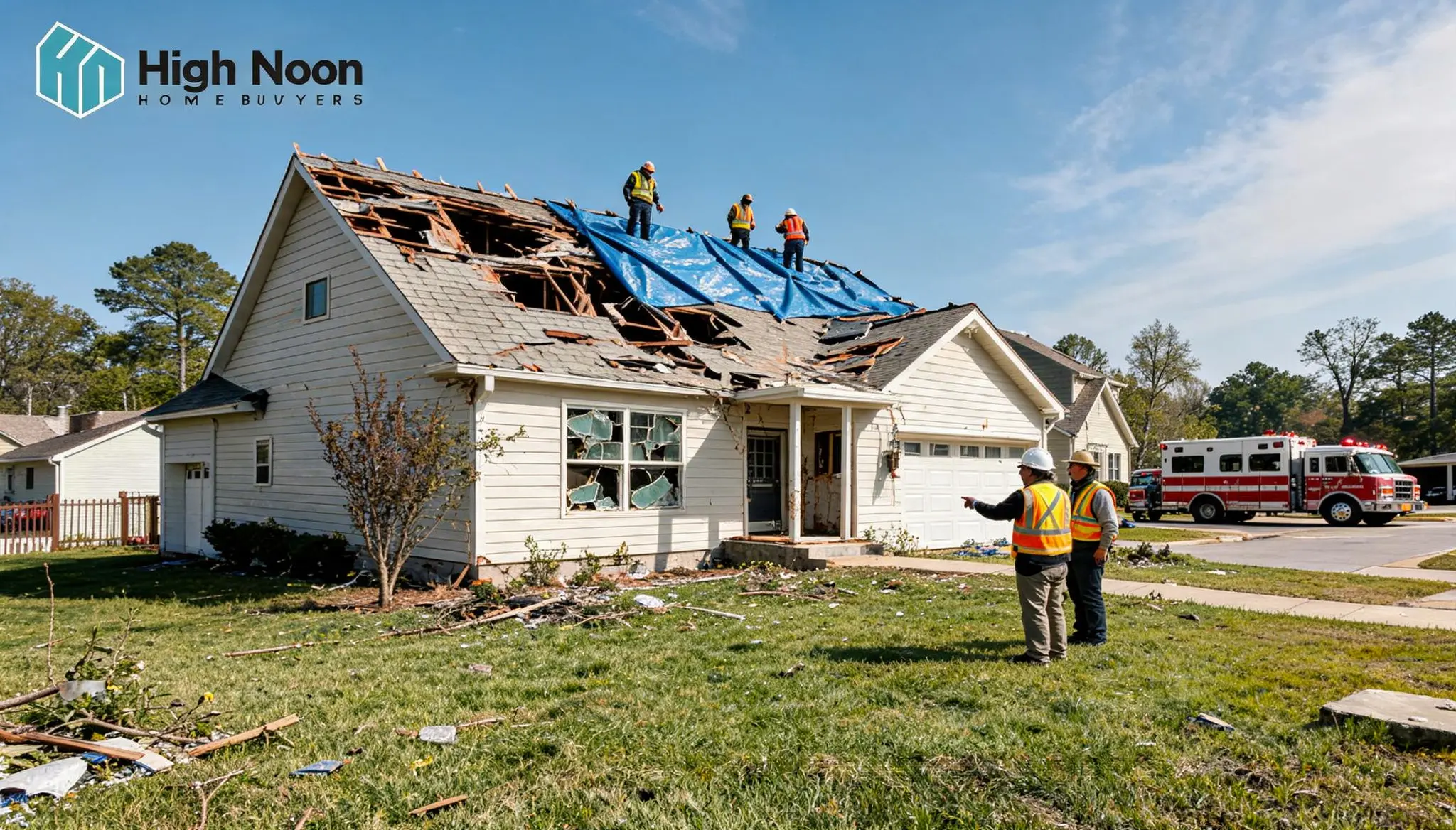
If a tornado just tore through your part of Alabama, you already know the feeling: shingles scattered across the yard, water stains creeping across the ceiling, a phone full of unanswered calls to contractors, and an insurance adjuster who can’t get out there for another two weeks. On top of all that, you’re trying to figure out one simple question, is this house even worth fixing?
Alabama sits right in the middle of what folks call Dixie Alley, one of the most tornado-prone stretches of the country. If you’ve lived here a while, you know storms like this aren’t a once-in-a-lifetime event, they’re just part of owning a home in this state.
This guide walks through what tornado damage Alabama actually looks like, how insurance claims tend to play out, what a realistic repair timeline looks like, and what permits and codes you might run into along the way.
By the end, you’ll have a clearer picture of whether rolling up your sleeves for repairs makes sense for your situation, or whether selling the house as-is might be the easier road. This is general, educational information only, not legal, insurance, or tax advice.
You don’t need an engineering degree to spot the signs. Most Alabama homeowners notice things like missing or lifted shingles, a roof that’s been punched through by flying debris, walls that look like they’re leaning or cracked, windows blown out, doors and garage doors that won’t line up right anymore, water coming in through the roof, and ceiling cracks that hint something shifted up above. Sometimes the house just doesn’t “feel right” after a storm, and that instinct is usually worth listening to.
Here’s the distinction that matters most: cosmetic damage is the stuff that looks bad but doesn’t threaten the bones of the house, a few missing shingles, a dented gutter, some drywall scuffs. Structural damage is different. That’s roof framing, load-bearing walls, or the foundation itself, and it has to be dealt with before anything else, because it affects whether the house is even safe to live in.
If you’re unsure which one you’re dealing with, don’t guess. Inspectors typically check structural integrity first, then electrical hazards, gas lines, and mechanical systems. If any of those are questionable, stay out of the house until it’s been professionally cleared.
The general order of things after a tornado: make sure it’s safe to even approach the house, do a visual check from outside, throw tarps over openings to stop further damage, call your insurance company, get a professional inspection and contractor estimates, and only then start building an actual repair plan. Skipping straight to “let’s just patch it up” before you know the real scope is how repair budgets blow up.
Which counties get hit hardest changes with every storm, so don’t rely on Facebook posts or rumors to figure out what happened in your area. The National Weather Service publishes official storm path and damage survey data, and the Alabama Emergency Management Agency (AEMA) tracks county-level impacts and disaster declarations.
Location affects more than just how bad the damage is, it affects how hard the recovery is going to be:
Insurance companies tend to scrutinize claims more closely in heavily hit areas. Contractors get booked solidly fast, and in rural Alabama counties, there simply aren’t many licensed ones to begin with, which sometimes opens the door for unlicensed folks looking to take advantage of desperate homeowners.
Building departments in smaller towns can take much longer to process permits than a city like Birmingham or Huntsville. And even after your individual house is repaired, buyer and renter interest in a heavily damaged neighborhood can stay soft for a while.
Worth checking: the NWS storm survey maps, your local building department’s notices, any county or state disaster declarations, and insurer advisories for your area. If the damage in your neighborhood was widespread, it’s also worth asking yourself honestly whether the area is one where you want to sink more money into rebuilding, or whether it’s time to consider selling the property as-is and letting someone else take on that project.
Here’s the honest answer: it depends, and it’s almost always longer than people expect. A little cosmetic work might be done in a few weeks. Anything touching the structure, electrical, or plumbing can easily stretch into many months.
| Phase | What Happens | What It Means For You |
| Emergency mitigation | Tarps, boarding up, shutting off utilities | Get someone out there fast and take photos of everything |
| Inspections and scope | Structural engineer and adjuster visits, contractor bids | Get more than one bid, don’t start work until the scope is clear |
| Permit submission | Plans go to the building department | Confirm requirements early; incomplete paperwork means delays |
| Structural and roof repairs | Framing, walls, foundation | Wait for adjuster sign-off before crews start tearing into things |
| Mechanical and utility work | Electrical, HVAC, plumbing | Line up licensed tradespeople ahead of time, they book up fast |
| Interior finishes | Drywall, flooring, paint, fixtures | This part can wait until cash flow allows |
| Final inspections | Building department sign-off | Build in extra time, post-storm inspection backlogs are common |
What this table doesn’t fully capture is what it actually feels like to live through it: weeks of phone tag with your insurance company, juggling contractor bids, discovering damage you didn’t know was there once walls get opened up, and paying out of pocket while you wait.
Every week that passes is another week of taxes, insurance premiums, and a house that isn’t generating any income or peace of mind. For a lot of owners, that stretch of unknowns is exactly why repairing isn’t the obvious choice it might seem like at first.

The process isn’t complicated in theory: document everything, stop further damage, file the claim, and stay on top of communication.
A few basics worth knowing. Dwelling coverage pays for damage to the structure itself. Personal property coverage handles damaged belongings inside. Additional living expenses (ALE) may cover a place to stay if your home isn’t livable. And here’s an important one: wind damage from a tornado is usually covered under a standard homeowners policy, but water damage, even water that got in through a hole the tornado created, sometimes falls under flood coverage instead, which is a separate policy. Read yours carefully or call your agent and ask directly.
In plain terms, here’s what to do: make sure it’s safe before you go back in, take photos and video of everything before you move or clean up anything, do reasonable things to stop further damage (a tarp, boarded windows), call your insurer as soon as you can, know your deductible and policy limits before the adjuster shows up, walk the property with them but don’t feel pressured to sign anything that day, get a few contractor estimates to compare against the adjuster’s numbers, and keep every email, receipt, and note from phone calls.
Even when everything goes right, insurance payouts don’t always cover the full cost of repairs, and the process can take longer than homeowners expect, especially after a storm hits a whole region at once and claims pile up. For large or contested claims, it may be worth talking to a public adjuster or an Alabama attorney who handles insurance disputes. This isn’t legal advice, just a heads-up that you don’t have to navigate a denied or underpaid claim alone.
Investors who do this for a living know that tornado-damaged properties can work out, but only when they go in with eyes open about the risks. Those same risks are exactly what make repairing feel overwhelming for a regular homeowner who just wants their life back.
Hidden damage is the big one. What you can see from the curb is often just the surface; framing and foundation issues hide behind walls until someone opens them up. Code-upgrade requirements are another surprise, when repairs are substantial, Alabama jurisdictions often require bringing things up to current code, not just back to how they were, which adds cost nobody planned for.
Contractors are in short supply after a storm, especially in rural counties, so timelines stretch. And insurance shortfalls are common, if your policy pays actual cash value instead of replacement cost, or if wind and water coverage don’t line up the way you assumed, you could end up covering more of the bill yourself than you thought.
None of this means repairing is impossible. It means repairing is a real project, with real risk, real time, and real money on the line. If that sounds like more than you want to take on, that’s a completely reasonable conclusion, and it’s exactly the kind of situation where selling the house as-is, rather than rehabbing it yourself, starts to look like the simpler path.
Safety first: Confirm gas and electrical safety, shut off utilities if you’re unsure, and don’t go into a structure that looks unstable without a professional clearing it first.
Figure out what you’re really dealing with: Separate cosmetic issues from structural ones, and get a structural engineer’s written opinion before you commit to a repair budget.
Get real numbers: Collect at least three bids from contractors with actual disaster-repair experience in Alabama, check their licenses and insurance, and build in a contingency, hidden damage is the rule after a tornado, not the exception.
Coordinate with your insurer: Make sure your contractor’s scope lines up with the adjuster’s estimate before work starts, and get changes in writing.
Pace the work: Handle roof, structure, and utilities first; finishes can wait until your budget and schedule allow.
If this list already feels like more than you want to take on, and for a lot of homeowners, it is selling the house as- is worth seriously considering.
Once repairs touch the roof structure, load-bearing walls, or major electrical and plumbing systems, you’re almost certainly going to need permits in Alabama. Purely cosmetic work might not require one, but that varies by city and county, so it’s worth a quick call to your local building department before anyone picks up a hammer.
The basic flow: contact the building department early, submit a complete application the first time (incomplete paperwork is a common cause of delays), and schedule inspections at each required milestone, missing one can mean opening up finished work just to get it signed off.
One thing that catches a lot of homeowners off guard: code-upgrade requirements. When repairs are substantial, Alabama may require things like electrical panels, egress windows, or roof assemblies to meet current code, even if that’s not how the house was built originally. That can mean real money added to a repair budget that was already tight. Asking the building department about this before you commit to a repair plan can save you an unpleasant surprise later, and for some owners, it’s one more reason selling as-is and letting someone else handle the permitting process is the less stressful option.
When you’re trying to sort fact from rumor after a storm, a few official sources are worth bookmarking. The Alabama Emergency Management Agency tracks county-level disaster declarations and recovery resources, a formal declaration can affect insurance timelines and assistance eligibility.
The National Weather Service publishes official storm tracks and damage survey maps so you can confirm exactly what happened and where. Alabama Department of Insurance offers consumer guidance on filing claims and what to do if you and your insurer disagree. And if a federal disaster declaration has been issued for your county, FEMA may have assistance programs worth looking into.
Two things come up again and again with tornado-damaged homes in Alabama.
First: what looks like a roof problem can turn into framing, wall, and foundation work fast. One owner assumed the damage was mostly cosmetic, only to find serious shear wall damage once contractors opened things up, turning a manageable repair into a much bigger, much more expensive project. A structural engineer’s evaluation before you commit to anything is the single best way to avoid that kind of surprise.
Second: in a market where contractors book up quickly after a storm, getting bids lined up early, even before the adjuster shows up, can save weeks. But that takes time, energy, and follow-through that not every homeowner has the bandwidth for, especially right after going through something as stressful as a tornado.
If you read those two lessons and thought “that sounds exhausting,” you’re not alone. That’s exactly the gap selling as-is is meant to fill.
What should I know about tornado damage before deciding to repair?
Check for structural issues, understand what your insurance actually covers, get real contractor numbers, and find out what permits you’ll need. Hidden damage and code upgrades are the two things most likely to blow up a repair budget.
How do insurance claims work after tornado damage?
Document everything, stop further damage if it’s safe to do so, and call your insurer right away. An adjuster will inspect the property and compare notes with your contractor’s estimate. Keep records of every call, email, and receipt.
How soon should I file a claim?
As soon as it’s safe to assess the damage. The sooner you report it, the sooner the process starts, and delays can sometimes affect mitigation requirements.
Do I need permits to repair tornado damage in Alabama?
Most structural, roofing, electrical, and plumbing repairs do. Requirements vary by city and county, so check with your local building department before starting.
Can I sell a tornado-damaged house without fixing it first?
Yes. You’re not required to repair a home before selling it. Some buyers including cash home buyers purchase properties as-is, which means you can skip the contractors, permits, and inspections entirely.
Should I repair or sell a tornado-damaged property?
That depends on your time, budget, and how much uncertainty you’re willing to take on. If insurance is moving slowly, contractors are booked out, and the idea of months of repairs feels overwhelming, selling as-is may be the more practical choice.
If you’ve read this far, you’ve got a pretty good sense of what repairing a tornado-damaged home really involves: insurance back-and-forth, contractor bids, permits, inspections, hidden damage, and months of your time and money. For some homeowners, that’s a project worth taking on. For a lot of others, it’s simply too much, too expensive, too slow, too uncertain.
If the repairs feel out of reach, the insurance payout isn’t covering what you need, contractors aren’t returning your calls, or you just don’t want to put another dollar into a house that’s already given you enough stress, selling as-is is a real option worth considering.
High Noon Home Buyers purchases Tornado damage Alabama properties as-is, including no repairs, no contractors to manage, no commissions, and no waiting around for permits and inspections. If a no-obligation cash offer sounds like the simpler way forward, reach out at highnoonhomebuyers.com.